
Fountain Hills Streets
Maintaining and improving infrastructure is complicated — and nowhere is that more evident than in our streets, the Town’s single largest public asset. The condition of our road network varies widely, and decades of underfunding have left Fountain Hills without the resources needed to maintain or repair them properly.
Without new revenue, we cannot fix our streets.
Before we dig deeper into how we got here, here are a few key facts everyone should know:
Street System Overview
-
Streets date back to the early 1970s.
-
About half were built before incorporation (1989).
-
Network includes Local, Collector, and Arterial streets.
-
Many roads were built by private developers, then accepted by the Town.
-
Construction standards have changed over time.
-
The Town is responsible for maintenance and operations.
-
Three professional pavement evaluations conducted, most recently in 2022.
-
166 linear miles.
-
$214 million estimated asset value (2023).
-
Nearly 100% asphalt.
Streets by Function
Our streets are divided into categories that explain how they are intended to function — and what kind of wear they should be expected to handle:
Local Streets
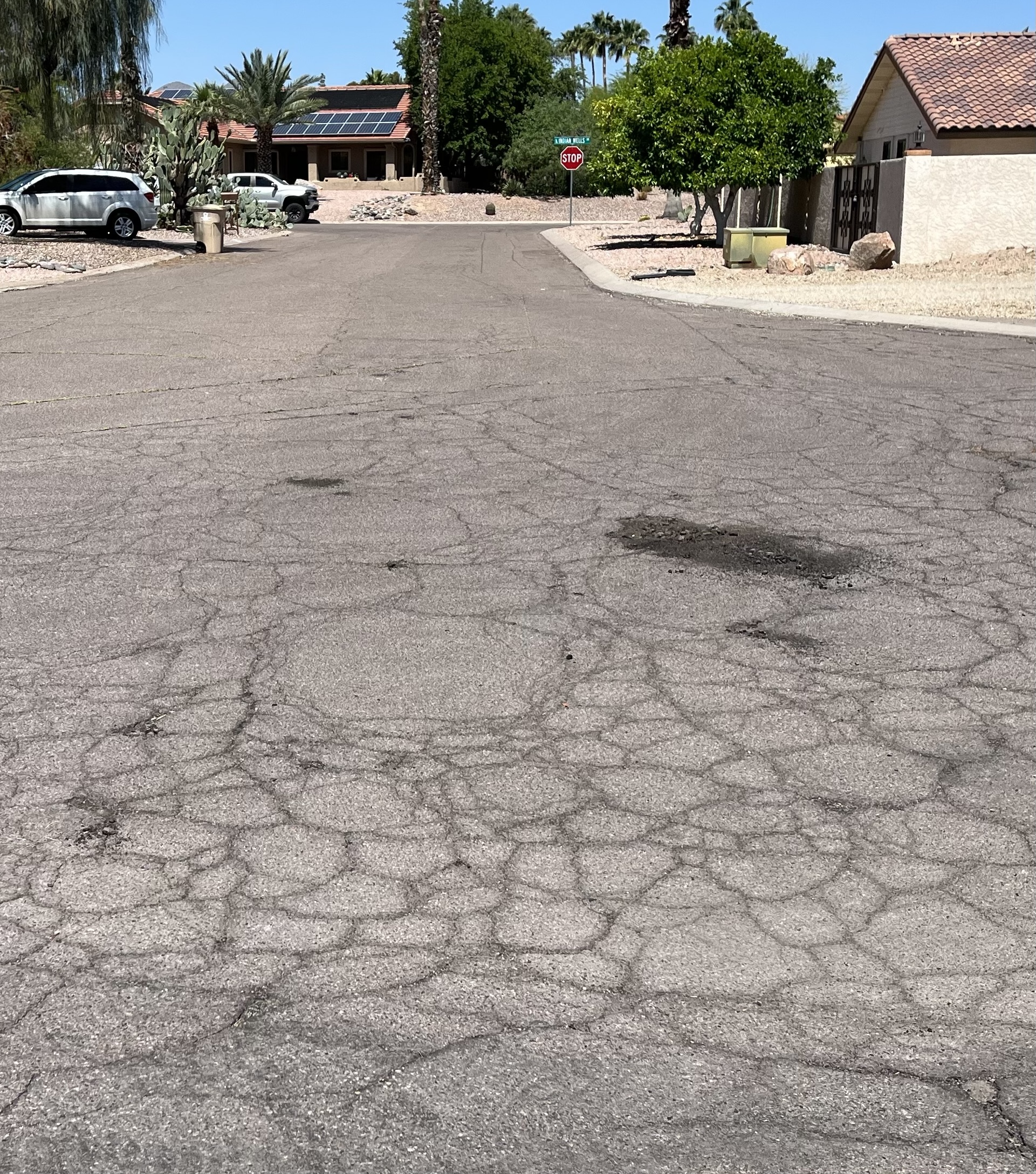
Neighborhood roads where most of us live. Stop signs, cul-de-sacs, short trips, slower speeds. These streets were built for family cars and local traffic — not commuters, service trucks, or buses cutting through town.
Collector Streets
These are the connectors — gathering vehicles from multiple Local streets and guiding them toward major roads. Higher traffic volume. Sometimes signalized.
Arterial Streets
Major travel corridors that move a lot of vehicles across town and often support businesses and services. Fewer driveways. More wear and tear.
As Fountain Hills has grown, many streets are no longer used the way they were originally designed. Local streets are acting like Collectors, and Collectors are functioning more like Arterials — worsening conditions faster.
Topography and Soil Conditions
First and foremost, they don’t call it Fountain Flats! Our town is known for its hills — and today, most new building happens on even steeper terrain on the west and south sides.
Beneath those hills is caliche — a hardened soil layer common in the Sonoran Desert and often found close to the surface. Anyone who has tried to dig a hole here knows exactly what that means.
Caliche can be a blessing and a curse:
-
It can support long-lasting pavement when traffic is light.
-
Sharp curves, steep slopes, higher speeds, and heavier vehicles accelerate cracking and deterioration.
In other words: our terrain makes street design more challenging — and more expensive.
Construction Differences Over Time
Not all streets were created equally. For example:
-
Pre-incorporation streets (1970–1989) were frequently built to lower standards.
-
Developer-built streets vary in base prep, thickness, and utility trenching.
-
Even newer streets face stress from growth and changing traffic patterns.
As Fountain Hills expanded rapidly in the 1990s and 2000s, usage patterns changed faster than funding availability — and pavement conditions have suffered.
Why It Matters
We’ve reached a point where waiting only makes the problem bigger — and more expensive. Street conditions span the entire spectrum from excellent to failing. Once pavement reaches a certain point, fixing it costs dramatically more than if timely maintenance had been performed.
This isn’t about blaming a particular mayor, council, or Town staff. It’s about facing the truth:
For decades, Fountain Hills has not approved the funding necessary to care for our streets — even though we rely on them every single day. Promises to “shift funds around” have not materialized into sustainable solutions.
Bottom line:
If we want reliable streets in Fountain Hills, we must invest in them.